Thermoset Coatings
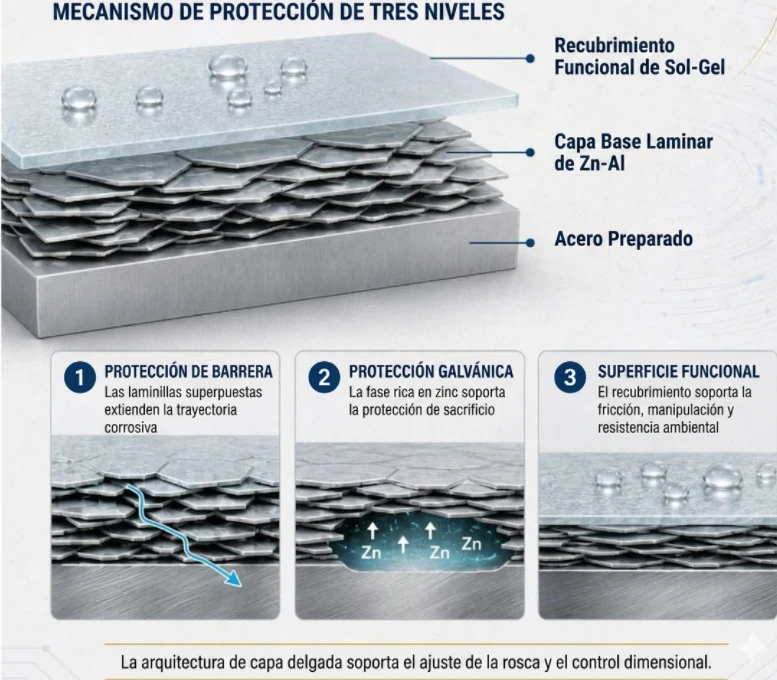
Zinc and aluminium flake, fluoropolymers and PTFE: the most evolved anticorrosive protection, with mechanical efficiency and minimal film thickness.
MULTILAYER SYSTEM
Thousands of hours of protection. Microns of precision.
Zinc and aluminium flake form a compact cathodic barrier that withstands thousands of hours in the salt spray chamber without altering thread tolerances. A top layer of PTFE or fluoropolymers adds exceptional resistance to acids, solvents and aggressive environments.
The low, controlled friction coefficient —typically 0.12 to 0.15— turns PTFE into a permanent solid lubricant. It prevents seizing or galling during tightening and converts the torque energy into a predictable axial preload.
The systems are free of hexavalent chromium and of heavy metals restricted by RoHS and REACH.
XYLAN®
Engineering for extreme environments.
−250 °C
Thermal stability from cryogenic conditions upwards.
+285 °C
Superior thermal performance in demanding service.
Offshore
Adhesion and flexibility even after seawater immersion.
Xylan® is a benchmark engineered coating for mining, marine and offshore service. Its flexibility prevents flaking during transport or heavy assembly while retaining adhesion after severe exposure.
SYSTEM SELECTION
Every layer answers to real service conditions.
We assess mechanical loads, design torque and operating temperature together with the environmental and industrial corrosivity classified under ISO 12944.
For Andean mining, refineries or coastal areas, we define the exact configuration of layers and materials to achieve a long, predictable and verifiable service life.
CHAPTER 5 · ASTM F3393
A visible, dry lubricant, ready for torque.
When the system includes an additional lubricant, it must be dry to the touch, clean and distinguishable by contrast or colour from the base metal. Quality control and assembly can then verify visually that the bolt is ready for the design torque without altering the preload.
IHE PREVENTION
Non-electrolytic application, without strong acids.
ASTM F3393 protects A490 bolts and metric classes 10.9/12.9 through shot blasting and mechanical-thermal application. Curing at 300–320 °C consolidates the flakes and helps drive off residual hydrogen traces, avoiding the mechanism introduced by acid electrolytic baths.
FINISHES AND ENVIRONMENTS
Proven protection, guaranteed performance.
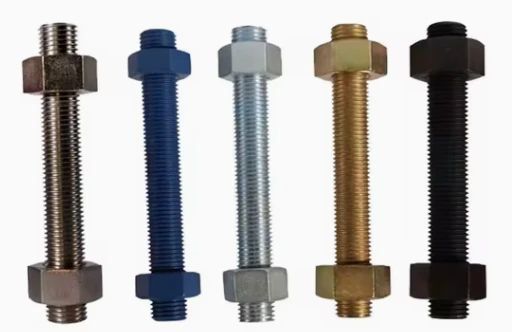
Finish family
Visual options to identify systems and lubricants.
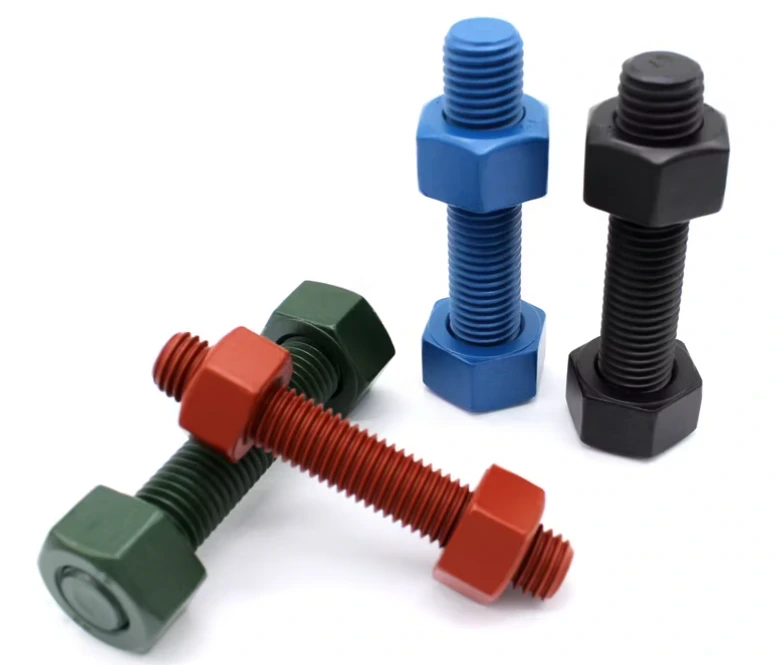
Functional coatings
Blue, black, green and red finishes on fasteners.
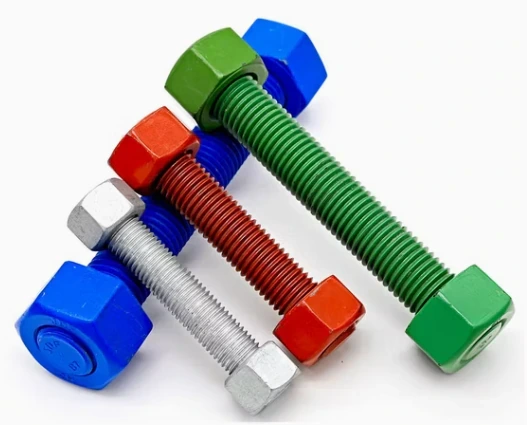
Identification by contrast
Colour makes the presence of the finish visually verifiable.
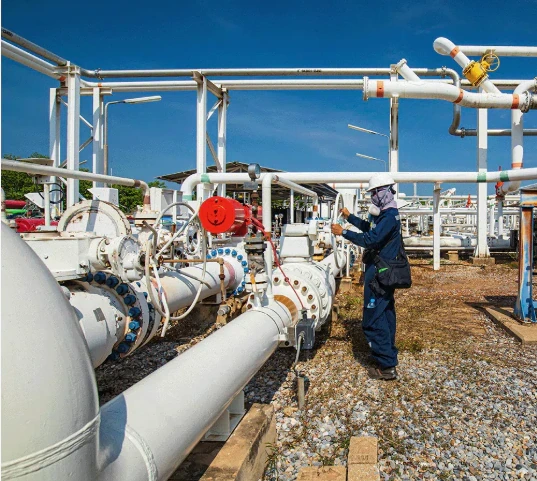
Oil & gas service
Chemical and mechanical protection in piping systems.
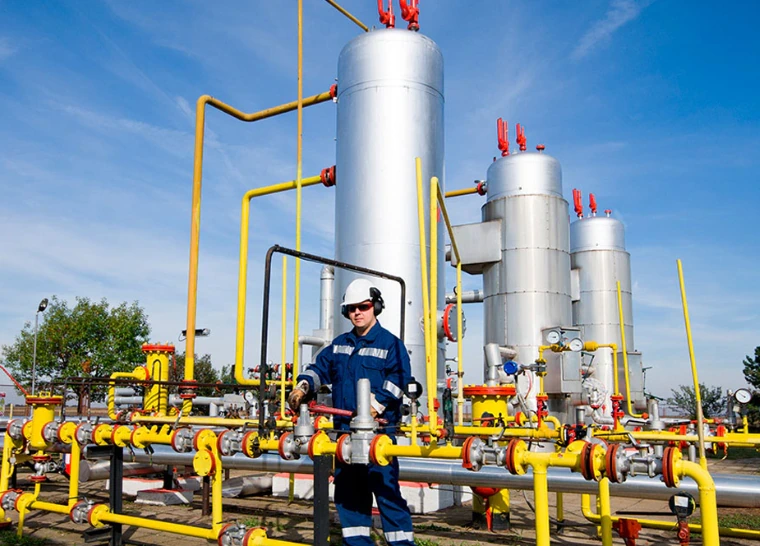
Severe industrial environments
Exposed, marine and highly demanding applications.
SURFACE PREPARATION
Shot blasting vs. chemical pickling
Fastener hardness determines which method is technically admissible.
Shot blasting
- Dry cleaning with abrasive particles at high velocity.
- Mandatory for high-strength bolts: it uses neither acids nor aqueous solutions.
- Prevents hydrogen absorption and induces residual compressive stresses that improve fatigue and corrosion resistance.
Chemical pickling
- Traditional method of electrolytic processes and hot-dip galvanizing.
- The acid dissolves iron oxides, but releases atomic hydrogen.
- In high-hardness steel, hydrogen can weaken grain boundaries and cause brittle failure under torque.
Technical warning: acid cleaning is prohibited on bolts harder than 39 HRC, including ASTM F3125 Grade A490 and metric class 12.9. The surface must be prepared by controlled shot blasting.
ENGINEERING APPLIED TO YOUR PROJECT
Need ASTM F3393 thermoset coatings for your project?
Send us specifications, quantities and exposure conditions. Our technical team will help you define the right system.